

Does AI Logo Design Really Work? Understanding Its Role vs Human Designers
AI logo design tools have become widely used in recent years. With just a few prompts, users can generate logos instantly, leading many to believe that AI can fully replace human designers.
However, AI is best understood as a supporting tool—not a complete replacement for professional design thinking. While it can assist in the early stages of exploration, it cannot replace the strategy, creativity, and decision-making of a human designer.
AI Logo Design Can Help, But Has Limitations
AI tools are useful for:
- Quick visual exploration
- Generating ideas and inspiration
- Moodboard development
- Early-stage concept testing
In this sense, AI can help speed up the research and brainstorming process.
However, AI does not understand:
- Your brand story
- Business goals and positioning
- Target audience behavior
- Market differentiation strategy
AI generates based on patterns, not intention or business context.
The Risk of AI-Generated Logos: Lack of Originality
One important concern with AI-generated logos is that they are often based on existing datasets and visual patterns.
This means:
- Similar outputs may appear across different users
- Designs may lack uniqueness
- Some results can unintentionally resemble existing logos or styles
In other words, AI outputs may risk being derivative or “copycat-like” in nature, even if unintentionally. This is because AI recombines existing visual information rather than creating truly original brand concepts.
For businesses that want strong identity and differentiation, this can be a limitation.
Why AI Cannot Replace Human Designers
A professional logo is not just a graphic—it is a strategic brand asset.
Human designers provide value that AI cannot replicate:
Creative Thinking
Designers create original concepts based on meaning, emotion, and storytelling.
Brand Strategy
A logo must align with business positioning, audience perception, and long-term goals.
Contextual Understanding
Designers adapt solutions based on specific industries, culture, and brand direction.
Refinement Process
Great design is developed through feedback, iteration, and professional judgment—not instant output.
AI can generate options, but it cannot evaluate whether a design is truly right for your brand.
The Misconception: AI Is Better Than Designers
Some believe AI is better because it is:
- Faster
- Cheaper
- Easily accessible
However, speed and cost do not define quality or effectiveness.
A successful logo is not just visually appealing—it must function across real-world branding applications and communicate the right message to the right audience.
AI can generate visuals, but it does not understand brand purpose or business impact.
How AI Should Be Used in Logo Design
AI is not a replacement for designers, but it can support the design process when used correctly.
It is useful for:
- Inspiration gathering
- Style exploration
- Early concept direction
- Rapid idea testing
However, final design direction, refinement, and brand alignment should still be handled by a professional designer.
The most effective workflow often combines:
- AI for exploration
- Human designers for strategy and execution
Why a Clear Brief Matters Before Working With a Designer
Before engaging a designer, clarity is essential.
You should understand:
- What your brand stands for
- Your target audience
- The message your logo should communicate
- Where the logo will be used
- Style preferences or references
A designer translates your direction into a visual identity. They are not guessing—they are interpreting your brief professionally.
A clear brief leads to better design outcomes and a smoother workflow.
Respecting Designers in the Age of AI
Design is not just execution—it is a professional creative service involving:
- Research
- Concept development
- Iteration
- Strategic thinking
- Visual problem-solving
AI tools may support ideas, but they do not replace the experience and judgment of a professional designer.
Respecting designers means recognizing that branding is not just about generating visuals, but building meaningful identity systems.
Conclusion
AI logo design tools are useful for exploration, but they are not a replacement for human designers.
AI can assist with:
- Speed
- Inspiration
- Early-stage ideas
Human designers provide:
- Original thinking
- Brand strategy
- Creative direction
- Professional execution
A strong logo is not created by speed alone—it is created through understanding, intention, and design expertise.
Before working with a designer, ensure you have a clear direction and brief. Good communication leads to better results and a more effective brand identity.
How Much Does Logo Design Cost in 2026? Full Price Guide
How Much Does Logo Design Cost in 2026? Full Price Guide (USD & MYR)
Logo design pricing in 2026 varies depending on experience level, design process, and the strategic depth behind the work. A logo is not just a visual mark—it is a core element of brand identity, recognition, and long-term business positioning.
Below is a realistic breakdown of logo design costs in USD and Malaysian Ringgit (MYR), based on current global freelance and agency market standards.
(Estimated conversion used: 1 USD ≈ 4.7 MYR)
1. DIY and AI Logo Makers
$5 – $50 (RM 25 – RM 235)
This category includes template-based platforms and AI-generated logo tools.
What you typically get:
- Pre-made templates
- Basic customization
- Instant output files
Limitations:
- No brand strategy
- Low originality
- High chance of similarity with other brands
Used mostly for personal projects or temporary branding.
2. Beginner Freelance Designers
$50 – $200 (RM 200 – RM 980)
This range includes entry-level designers building experience and portfolios.
What you typically get:
- Simple logo concepts
- Limited revisions
- Basic file formats (PNG, JPG)
Limitations:
- Minimal research or branding strategy
- Limited refinement and consistency
Suitable for very small businesses or early-stage startups.
3. Intermediate Freelancers (Small Business Range)
$200 – $900 (RM 980 – RM 4,000)
This is a common range for small businesses seeking structured design work.
What you typically get:
- Basic research-based approach
- Multiple logo concepts
- Revision rounds for refinement
- Vector files (AI, SVG, EPS)
- Basic brand direction (color and typography)
At this level, design becomes more intentional and consistent.
4. Professional Designer Rate
$700 – $1,750 (RM 2800 – RM 8,000)
This represents a professional design service focused on strategy, refinement, and brand consistency.
What you typically get:
- Brand and market research
- Concept development with design rationale
- Multiple refined logo directions
- Strong typography and composition control
- High-quality vector deliverables
- Consistent brand application guidance
- Structured professional workflow
This level is suitable for businesses that value long-term brand quality and professional execution.
5. Branding Agencies and Studios
$1,500 – $5,000 (RM 7,000 – RM 23,000)
At this level, logo design is part of a full brand identity system.
What you typically get:
- Market and competitor research
- Multiple brand identity directions
- Full logo system (primary, secondary, symbol)
- Brand guidelines (color, typography, usage rules)
- Structured creative direction
Suitable for growing businesses and rebranding projects.
6. High-End Branding Agencies
$5,000 – $20,000+ (RM 20,000 – RM 94,000+)
This level focuses on complete brand strategy development.
What you typically get:
- Deep brand positioning strategy
- Audience and market research
- Creative workshops
- Full visual identity system
- Long-term brand application framework
Used by established companies and funded startups.
Why Logo Design Pricing Varies
Experience level
More experienced designers provide stronger strategic thinking and consistency.
Design depth
Lower tiers focus on visuals, while professional levels include branding strategy.
Time investment
Simple logos take hours, while branding systems take days or weeks.
Deliverables
Higher pricing includes full identity systems, not just logo files.
Business impact
A strong logo builds trust, recognition, and long-term brand value.
Respecting Designers in the Age of AI
Logo design should not be reduced to automated generation alone. While AI tools can produce quick outputs, they do not replace human creativity, brand understanding, and strategic thinking.
Professional designers invest time in research, concept development, and refinement to ensure the design aligns with business goals and audience perception. This process creates meaning and long-term value behind the identity.
Conclusion
Logo design pricing reflects expertise, strategy, and creative process—not just visual output.
Summary of market ranges:
- $5 – $200 (RM 25 – RM 980): Basic and beginner level
- $200 – $900 (RM 980 – RM 4,000): Intermediate freelance level
- $700 – $1,750 (RM 3,000 – RM 8,000): Professional designer rate
- $1,500 – $20,000+ (RM 7,000 – RM 94,000+): Agency-level branding
Choosing the right investment depends on business goals and long-term direction.
Art Max Magazine (Indonesia) | Interview
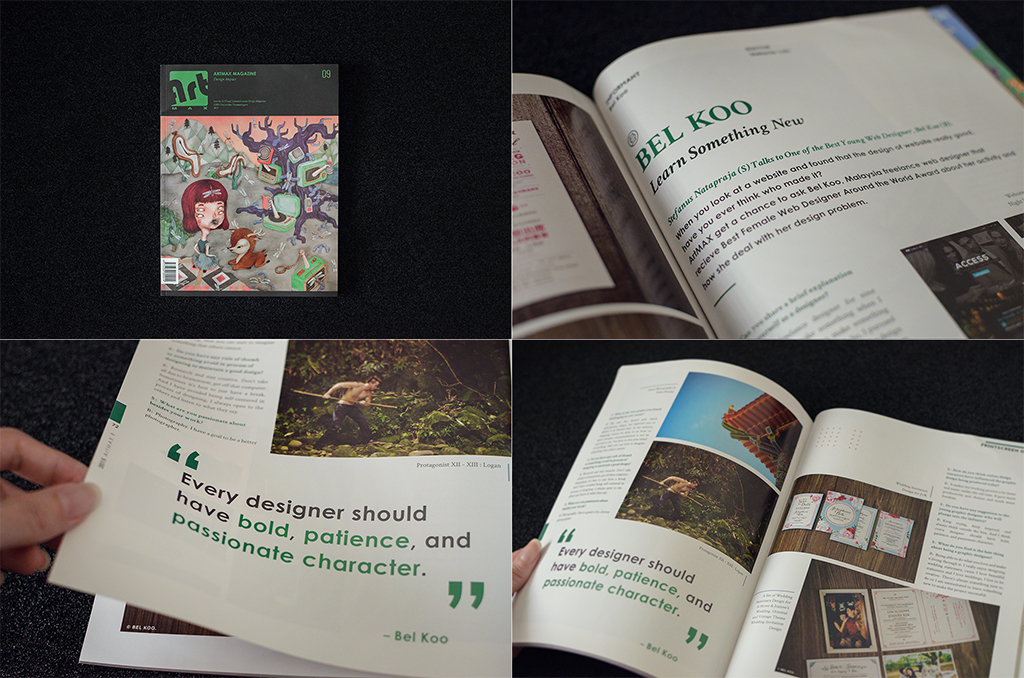
First, can you share a brief explanation about yourself as a designer?
I’m a freelancer designer for 9 years and love creating new things for people around the world.
How would you describe your approach to design?
I love to create things when I was a small kid. So I pursuit my dreams and learn more about design after graduating from secondary school.
You are very well known for your creative work on web design, what drives your interest on web design?
It’s the challenge that every different assignments given to me. Having meet the requirement and impressing my clients, it keeps me going for more.
Is there any influence to your way of thinking (Designing)? What are they? And how does it feed your work?
Inspirations from other respected designers around the world always keeps me fueled to have more out of the box design for my work.
What is the very part of designing you found critical? How do you deal with it ?
We have to know our limitation and what you can deliver. There are some task that were not meant for you. Just let it go.
How do you deal with pressure on designing your artwork?
I usually take a break from work and resume after I rest enough.
What is the very project you found challenging in your career?
The ones that doesn’t give much information, delays it and expected you to deliver within 12 hours.
What type of project do you enjoy working the most? And why?
I enjoy designing cards because it’s less complex.
What do you found is the best thing about being a graphic designer?
The flexibility of my working hours and people liking my work!
What characters do you think every designer should have?
Bold, Patience and Passionate.
Do you have any rule of thumb to maintain a good design?
Keeping things simple.
Is there anything that you avoid in the process of designing?
Avoid being self-centered. Always open to others and listen.
What’s the best advice you’ve heard and repeat in terms of designing?
Keep trying and trying.
You’ve been awarded as one of the best female web designer in the world. In your opinion what is your strength point among the majority?
I don’t think I am that good. I’ve seen a lot of web designers in the world who are capable of creating far more creative designs.
How do you think online design resources have influenced the graphic design being produced today?
It’s a lot faster and easier unlike the old time. It gave productivity and choices much more freedom.
What are you passionate about besides your work?
Photography.
Is there any goal you want to achieve next?
Being a better photographer? :)
Do you have any suggestion to the young graphic designer who will plunge into the industry?
Keep trying, Keep inspired and always think outside the box.
In your opinion, how big it is the impact of graphic design for the Internet industry?
Well, it does make a lot of differences. The key to the best surfing experience will be a properly designed website. Always.
